Data collection
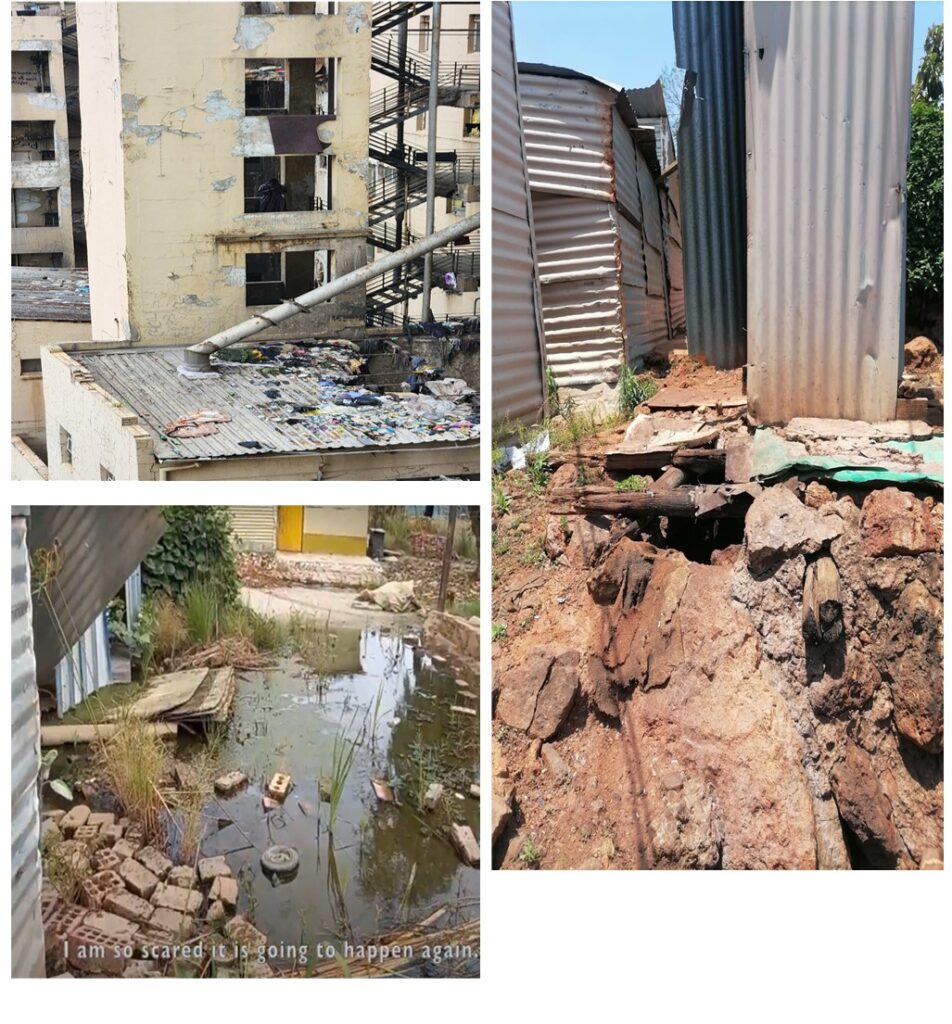
Data collection is the heart of the HDSS. GRT-INSPIRED comprises of a call centre with Call centre agents calling twice a year and teams in field conducting one face to face visits, in Hillbrow, Atteridgeville and Melusi, for 45 weeks of the year. This is extremely hard work: in Hillbrow, teams have to negotiate crime, gangs, and attempting to access captured buildings. In Melusi and parts of Atteridgeville, the teams have to negotiate floods, rocky terrain, snakes, and slipping down the ridge. All teams are exposed to bad weather.
The grit and commitment of our fieldwork team is remarkable. But when asked if the tasks are too onerous, or the work too hard, the response is consistent: the interactions with respondents are invigorating and keep them engaged and interested. Given that Hillbrow includes multiple nationalities, Atteridgeville is a classic township with large family units including grand-parents, and Melusi is predominantly a young and energetic community, there are multiple different types of interaction, with very different types of people. Fieldworkers have to be technically adept: but they are at heart ‘people’s people’ – it is the human exchanges that keep their spirits up, through cold and rain or heat and thunderstorms.
With the recent adoption of a tool, SAPRIN Util, data accuracy is checked every night as data are ‘ingested’ (and accepted or rejected by the system) and fieldworkers will return the following day to correct errors or fill a missing piece of information. Training continues throughout the year – and through the month and often occurs weekly or daily as issues arise. Interaction is vital across the sites.
All fieldworkers are equipped with devices to collect everything from informed consent to detailed answers to the SAPRIN protocol as well as the GRT-INSPIRED ‘urban module’. The data are checked in each site office every evening with the first level of correction happening at the site. The data are then synched to the data center (based in the School of Public Health at Wits) where Survey Solutions is used to collate and re-check the accuracy of data.
The data team are constantly engaged in data cleaning, writing scripts to run and clean (and identify errors), confirming and conducting migration reconciliation: i.e. reconciling whether there have been internal migrations – movement within the node – or external migration, which requires follow-up to identify where the respondent moved to and whether or not this is a short stop or they have permanently left the DSA. The issue of migration is critical to a province like Gauteng, and the work done to precisely measure and analyse in- and out-migration is core to the work on the HDSS.
Collaboration with academics and institutions
GRT-INSPIRED is a multi-university collaboration in every respect, and so collaboration is in our DNA. But our ambition, from the outset, was to collaborate with academics from multiple disciplines. Not everyone would find what they wanted in the existing HDSS protocols, and so we approached academics at all three universities, when we launched GRT-INSPIRED, and asked for questions those academics were interested in. Out of this, we created the ‘urban module’, a set of questions unique to GRT-INSPIRED, and geared to enriching our understanding of context (we added questions on transport, household income and so on) as well as the interests of academic collaborators, which (in successive modules) have covered climate change and severe weather events, substance use, migration, mental health, ‘happiness’ scales and so on. GRT-INSPIRED can offer the responses of tens of thousands of people to these questions, at no cost to the academic, and the idea seems to be sound.
As indicated elsewhere, GRT-INSPIRED was designed with multi-disciplinarily at the core. An example would be our collaboration with Prof Willie Cronje from the Wits School of Electric Engineering, where he has designed powerful, lightweight solar kits. Prof Everatt and Pro-VC Prof Imraan Valodia had previously written a media article calling on government to ensure that the key people to be allowed to sell excess power back to the grid – this at a time of massive national load-shedding – were those in informal settlements. They would benefit themselves, in terms of health, safety and quality of life; and could earn an income (and grow that over time by harvesting more sunlight) and thus move off social grants. While the idea seemed (to us) to be self-evidently positive for all concerned, government remained silent – but the private sector noticed, and Mario Roos from LighTec https://lightec.co.za sponsored and managed the installation of solar kits in two Melusi shacks.
This in turn led to the formation of a new partnership between Mario and Wits’ private sector solar company, PECO POWER https://pecoower.co.za. Peco Power was formed by WITS Enterprise and Social Impact Investment firm, Umbono Capital, to commercialise the products Prof Cronje and his team were developing and manufacturing. The new company is now offering rent-to-own solar kits, with energy-appropriate additions including fridges (where medicine can be kept), TV sets, and so on. This in turn has led to journal articles, and Prof Everatt presented the notion of ‘portable sustainable development’ at a workshop on informality in Sheffield, in the UK. It is precisely this kind of virtuous cycle that GRT-INSPIRED seeks to create, with benefits for all participants – most importantly, for the residents of Melusi.
GRT-INSPIRED also collaborates across the SAPRIN network. For example, Agincourt – the oldest HDSS in the network – held a workshop on electrification in rural areas, hosted by Prof Martin Wittenberg – and we were able to profile the solar project at the workshop.
UJ WASH Work in GRT-INSPIRED
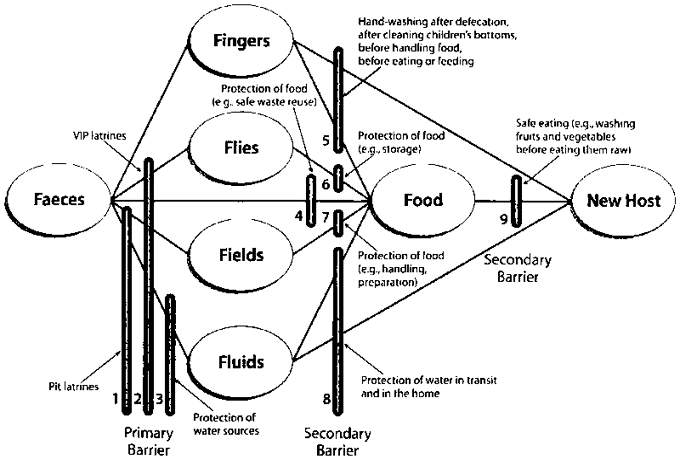
WASH – led by Prof Tobias Barnard (UJ PI). Testing sewerage, water and water storage across the node, testing for a range of pathogens, analyzing dishcloths, training in hygiene, etc. across all sites Hillbrow, Atteridgeville and Melusi.
Impact of WASH differences on microbial pathogens:
- Water – provided versus stored
- Sanitation – mostly hygiene related
- Hygiene – home and personal
Microbial movements and adaptations:
Differences in occurrence, virulence and antimicrobial resistance in E. coli and ESKAPE pathogens between different areas.