
Author: Web Admin

Data

Data collection

Data collection is the heart of the HDSS. GRT-INSPIRED comprises of a call centre with Call centre agents calling twice a year and teams in field conducting one face to face visits, in Hillbrow, Atteridgeville and Melusi, for 45 weeks of the year. This is extremely hard work: in Hillbrow, teams have to negotiate crime, gangs, and attempting to access captured buildings. In Melusi and parts of Atteridgeville, the teams have to negotiate floods, rocky terrain, snakes, and slipping down the ridge. All teams are exposed to bad weather.
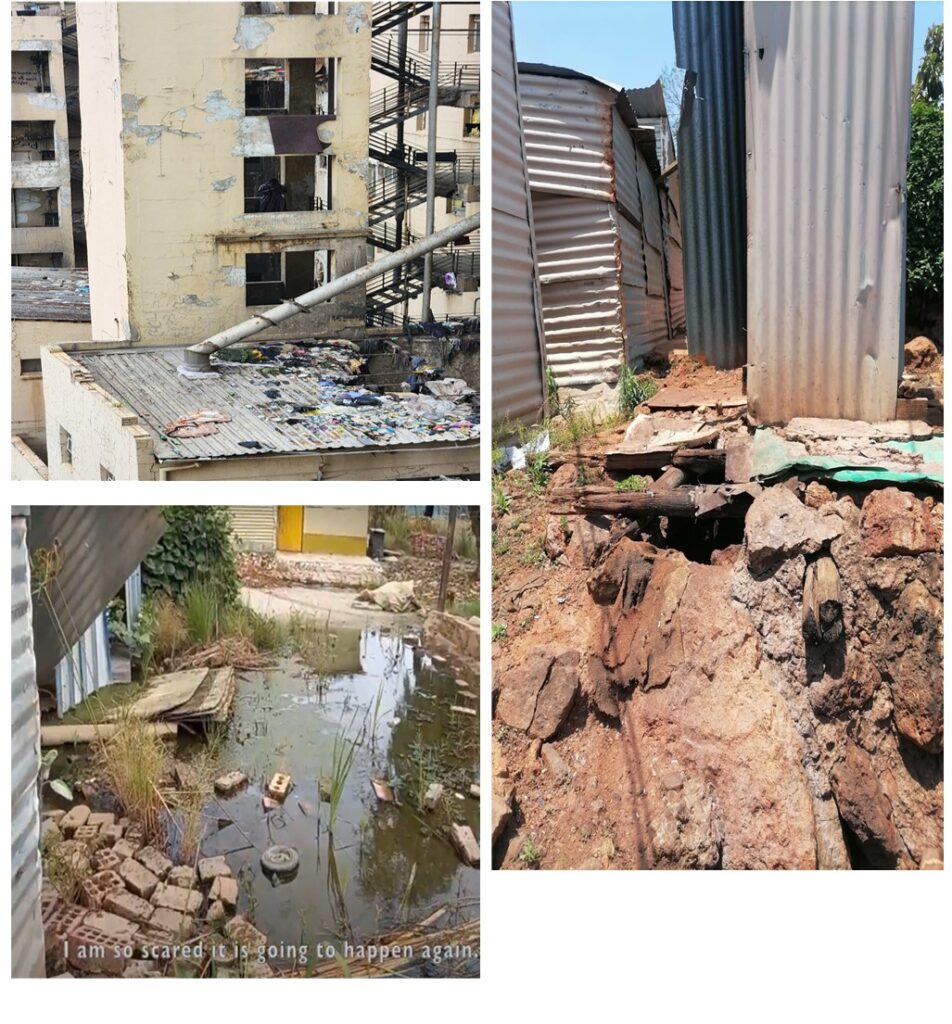
The grit and commitment of our fieldwork team is remarkable. But when asked if the tasks are too onerous, or the work too hard, the response is consistent: the interactions with respondents are invigorating and keep them engaged and interested. Given that Hillbrow includes multiple nationalities, Atteridgeville is a classic township with large family units including grand-parents, and Melusi is predominantly a young and energetic community, there are multiple different types of interaction, with very different types of people. Fieldworkers have to be technically adept: but they are at heart ‘people’s people’ – it is the human exchanges that keep their spirits up, through cold and rain or heat and thunderstorms.

With the recent adoption of a tool, SAPRIN Util, data accuracy is checked every night as data are ‘ingested’ (and accepted or rejected by the system) and fieldworkers will return the following day to correct errors or fill a missing piece of information. Training continues throughout the year – and through the month and often occurs weekly or daily as issues arise. Interaction is vital across the sites.

All fieldworkers are equipped with devices to collect everything from informed consent to detailed answers to the SAPRIN protocol as well as the GRT-INSPIRED ‘urban module’. The data are checked in each site office every evening with the first level of correction happening at the site. The data are then synched to the data center (based in the School of Public Health at Wits) where Survey Solutions is used to collate and re-check the accuracy of data.

The data team are constantly engaged in data cleaning, writing scripts to run and clean (and identify errors), confirming and conducting migration reconciliation: i.e. reconciling whether there have been internal migrations – movement within the node – or external migration, which requires follow-up to identify where the respondent moved to and whether or not this is a short stop or they have permanently left the DSA. The issue of migration is critical to a province like Gauteng, and the work done to precisely measure and analyse in- and out-migration is core to the work on the HDSS.

Collaboration with academics and institutions

GRT-INSPIRED is a multi-university collaboration in every respect, and so collaboration is in our DNA. But our ambition, from the outset, was to collaborate with academics from multiple disciplines. Not everyone would find what they wanted in the existing HDSS protocols, and so we approached academics at all three universities, when we launched GRT-INSPIRED, and asked for questions those academics were interested in. Out of this, we created the ‘urban module’, a set of questions unique to GRT-INSPIRED, and geared to enriching our understanding of context (we added questions on transport, household income and so on) as well as the interests of academic collaborators, which (in successive modules) have covered climate change and severe weather events, substance use, migration, mental health, ‘happiness’ scales and so on. GRT-INSPIRED can offer the responses of tens of thousands of people to these questions, at no cost to the academic, and the idea seems to be sound.

As indicated elsewhere, GRT-INSPIRED was designed with multi-disciplinarily at the core. An example would be our collaboration with Prof Willie Cronje from the Wits School of Electric Engineering, where he has designed powerful, lightweight solar kits. Prof Everatt and Pro-VC Prof Imraan Valodia had previously written a media article calling on government to ensure that the key people to be allowed to sell excess power back to the grid – this at a time of massive national load-shedding – were those in informal settlements. They would benefit themselves, in terms of health, safety and quality of life; and could earn an income (and grow that over time by harvesting more sunlight) and thus move off social grants. While the idea seemed (to us) to be self-evidently positive for all concerned, government remained silent – but the private sector noticed, and Mario Roos from LighTec https://lightec.co.za sponsored and managed the installation of solar kits in two Melusi shacks.

This in turn led to the formation of a new partnership between Mario and Wits’ private sector solar company, PECO POWER   https://pecoower.co.za. Peco Power was formed by WITS Enterprise and Social Impact Investment firm, Umbono Capital, to commercialise the products Prof Cronje and his team were developing and manufacturing. The new company is now offering rent-to-own solar kits, with energy-appropriate additions including fridges (where medicine can be kept), TV sets, and so on. This in turn has led to journal articles, and Prof Everatt presented the notion of ‘portable sustainable development’ at a workshop on informality in Sheffield, in the UK. It is precisely this kind of virtuous cycle that GRT-INSPIRED seeks to create, with benefits for all participants – most importantly, for the residents of Melusi.

GRT-INSPIRED also collaborates across the SAPRIN network. For example, Agincourt – the oldest HDSS in the network – held a workshop on electrification in rural areas, hosted by Prof Martin Wittenberg – and we were able to profile the solar project at the workshop.

UJ WASH Work in GRT-INSPIRED

WASH – led by Prof Tobias Barnard (UJ PI). Testing sewerage, water and water storage across the node, testing for a range of pathogens, analyzing dishcloths, training in hygiene, etc. across all sites Hillbrow, Atteridgeville and Melusi.

Impact of WASH differences on microbial pathogens:

  • Water – provided versus stored
  • Sanitation – mostly hygiene related
  • Hygiene – home and personal

Microbial movements and adaptations:

Differences in occurrence, virulence and antimicrobial resistance in E. coli and ESKAPE pathogens between different areas.
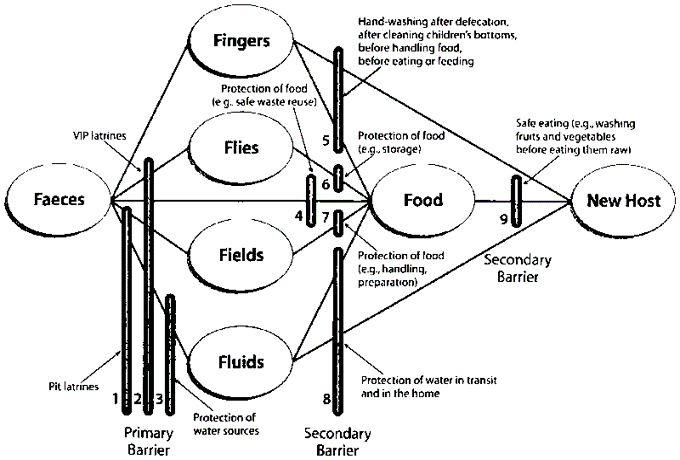
Figure 1 F-diagram showing the potential spread of enteric pathogens

Policy Imperatives

The 2019 White Paper on Science, Technology and Innovation (DST, 2019) states:

Interdisciplinary research teams, and the integration of knowledge from different disciplines, as well as from users, are necessary to deal with complex problems. Increasingly scholars and policy makers are viewing such approaches as “science for the future”, and as an opportunity to strengthen the relationship between science and society by putting social concerns at the core of scientific research. Open science is one avenue to realise the benefits of collaborative, transdisciplinary approaches to knowledge development.

SAPRIN’s intervention in Gauteng – by commissioning GRT-INSPIRED – is a key moment to try and realise some of these goals. So too the ‘Vision’ of the White Paper which talks to improving coherence and coordination; increased partnering between business, academia, government and civil society; increased human capabilities; and the promotion of transformation and inclusivity. The Roadmap (2016: 35) goes on to argue for HDSS sites to collect data on all vital events but also “residence status and migration, household dynamics, socio-economic status, disease monitoring, labour and employment status, education status and social protection”. This talks very directly to our approach – locating vital statistics in the urban and socio-economic complexity from which they emerge.

This ambitious goal is the basis for our selection of three sites, rather than one, to cover a range of urban forms in which the poor live. Gauteng is a magnet for in-country and international migrants, both high and low-skilled. StatsSA predict net international migration to South Africa (2016-2021) of over a million people, 48% of whom will come to Gauteng. (By contrast, 12% were heading for the Western Cape.) Internal migration adds to the Gauteng population growth rate. GRT-INSPIRED will allow all stakeholders to more accurately measure internal and cross-border migrancy, as well as length of stay, use of peri-urban areas as ‘springboards’ into city centres, and so on. The difference between migration to Melusi  and Hillbrow is stark – Hillbrow is attracting better educated, better paid, and employed migrants (internal and cross-border). After completing baseline, this was borne out by our data: Hillbrow (at the northern end) residents have the highest rates of completed education, highest employment, lowest uptake of social grants, and so on – in stark contrast with both Atteridgeville and Melusi.

Migration coupled with the legacy of the past has demographic effects that make Gauteng look different to anywhere else in South Africa – it has more men than women, and almost 30% of all youth in the country live in Gauteng (5,10 million or 28,6%). Fewer older people live in Gauteng than in other provinces. This suggests that the health and demographic profile of Gauteng will differ from other, less urbanised provinces.

The province has an estimated 1 million single person households, many of them long-term migrants and informal dwellers maximising benefits and remitting home; poorer suburbs are increasingly densifying and informalizing (shacks, caravans and tents in backyards are common) as people seek to move closer to their place of work or school (thus using informality to undo apartheid spatial engineering), and so on. Again, our data from baseline found that four in ten households in GRT-INSPIRED are single-person households.

It is heartening to see that even early data (from baseline) reflects and confirms key aspects of the Gauteng demographic profile, which set it apart from the rest of South Africa.

Sites & Nodes

Photo by Tembinkosi Sikupela on Unsplash

The heart of our proposal is the dispersal of the node across three very different urban forms – inner city, established township and informal (but slowly formalising) settlement. This in turn is informed by the richness and diversity of urban forms in Gauteng – we cannot cover them all, but we strongly believe that this important SAPRIN intervention should not be restricted to one spatial site, with the inevitable concentration of a limited form of urbanism.

Our approach is inherently ambitious – we want a range of urban forms in order to provide a rich dataset that better reflects vital statistics in communities in Gauteng. Melusi, for example, illustrates the need to be nimble and responsive, and not work only in one site. The images, taken a few years apart, show the speed with which informal settlements suddenly mushroom in size and complexity, and bring with them a wide range of health, psycho-social, socio-economic and other challenges.

The formerly largely vacant land became a large informal settlement, and is now slowly formalising. The population has particular characteristics, suggesting the importance of including new informal settlements such as these – while Community Health Workers have registered 1906 households, Melusi shows itself to have very few children aged 0-5, and even fewer aged 6-20. The population pyramid only begins to flesh out at 21 to around 40, when the population share of older people again rapidly diminishes. Substance abuse is high, as is TB, as are chronic conditions and food insecurity.

The use of unclean water from the nearby dam is self-evident from the image, which underscores the importance of government as a key player in this intervention: if services are not provided, especially clean water (at least to RDP level 1 standard of stand-pipes within 200m of every dwelling) as well as sanitation, the pollution and disease that will follow (and are already present) are clear. But the provision of services often leads to further growth – the conundrum government faces all the time – and so policy interventions to better understand how to manage informality is as important as policy interventions to improve health outcomes. In our view, these are inseparable.

Furthermore, we have assembled a multidisciplinary team, to help analyse the data through different lenses. By including over-populated (and often rack-rented) high rise apartments in Hillbrow, shacks in Melusi and ‘matchbox’ as well as some ‘township middle class’ housing in Atteridgeville, we are enabling the collection of health and vital statistical data in different urban spaces, because we believe that the data need to be analysed and understood in context. The context is not simply ‘urban’ – and urban is most definitely more than simply ‘not rural’ (equally true in reverse) – because in Gauteng, the urban is multifaceted and diverse, especially for poor residents. They may be found in free-standing un- or serviced shack settlements, individual backyard shacks, caravans, tents and traditional structures; in the gardens of former suburbs around the major metropolitan cities; in massive RDP settlements, where RDP houses and all spaces around them are rented out to multiple poor households (and the owner often returns to informality and re-joins the queue for a new RDP dwelling); on the streets and in public spaces, such as parks and verges; a million are estimated to be living in one-person households, others are crammed into high-rise apartments in city centres; and so on. All of these have differential access to services, including clean water, sanitation and education, health and the like. Our bid seeks to begin to unpack some of the urban complexity that surrounds us, in order to not merely present HDSS data, but to understand the urban effects (if any) on the data.

Melusi 2011-2019

The work in Hillbrow (and slightly beyond, towards the CBD) is reflected in the remarkable graphic below, which shows distribution of HIV self-testing kits, by trained fieldworkers, showing penetration into workplaces, dwelling units, and so on.

The Rationale

GRT-INSPIRED was the first urban node in the SAPRIN team. SAPRIN’s focus is on long-term surveillance using high quality longitudinal data to better understand health outcomes for the poor, as well as demographic change and migratory patterns and their impact; we have expanded this to cover key aspects of urbanisation, economic development and other areas of interest in this key space in South Africa.

Continue reading